


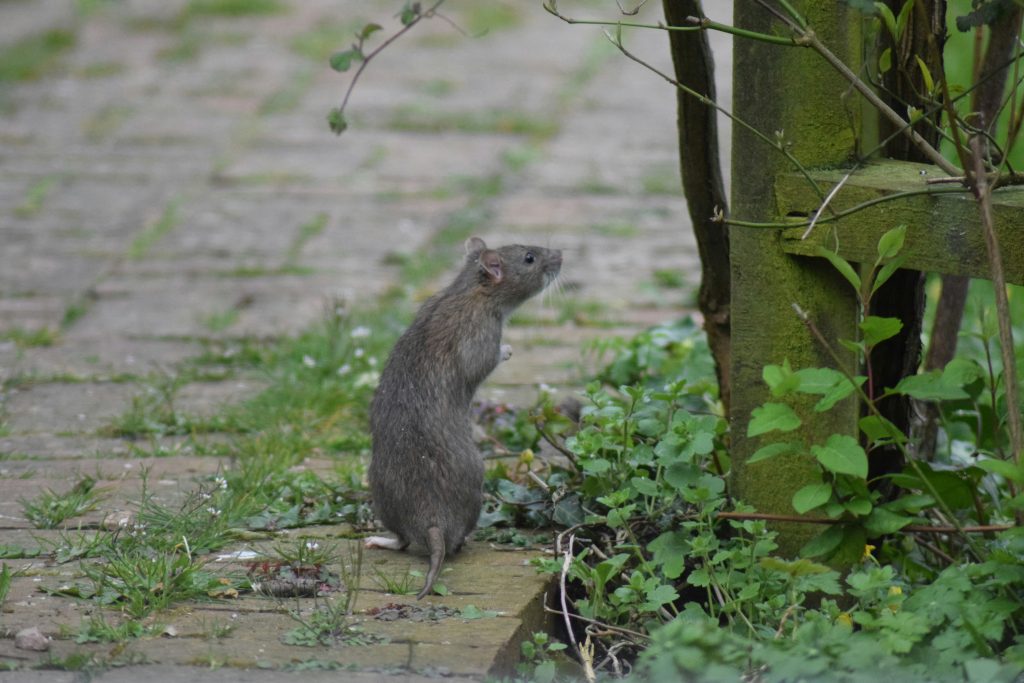

In this blog we discuss why we shouldn’t just reach for the rat poison. And make the argument for why instead we should avoid them entirely.
What are Rodenticides?
The rat poisons that are sold in garden centres and DIY stores and most often used against mice and rats are called rodenticides. Rat poisons have been around for decades, but unfortunately over time rats and mice have increasingly developed a genetic resistance. Manufacturers have therefore responded by developing ever stronger, more toxic versions – some of which are more than a hundred times more toxic than the original versions.
Are Rodenticides Humane?
Modern rodenticides (known as second-generation anticoagulant rodenticides) work by blocking the body’s ability to recycle vitamin K, destroying the animal’s blood clotting process. This results in a slow, agonizing death, sometimes over several days, from internal haemorrhaging, shock, and paralysis.
Rodenticides are Indiscriminate
Poison baits are toxic not only for rats, but also for other small animals. In the UK, outdoor positioning of rat poison frequently leads to accidental ingestion by harmless small mammals like squirrels, wood mice, bank voles, field voles, and shrews which can access bait stations or eat poison if it’s left out in the open.
What are the Secondary Consequences?
Image below was AI-generated.
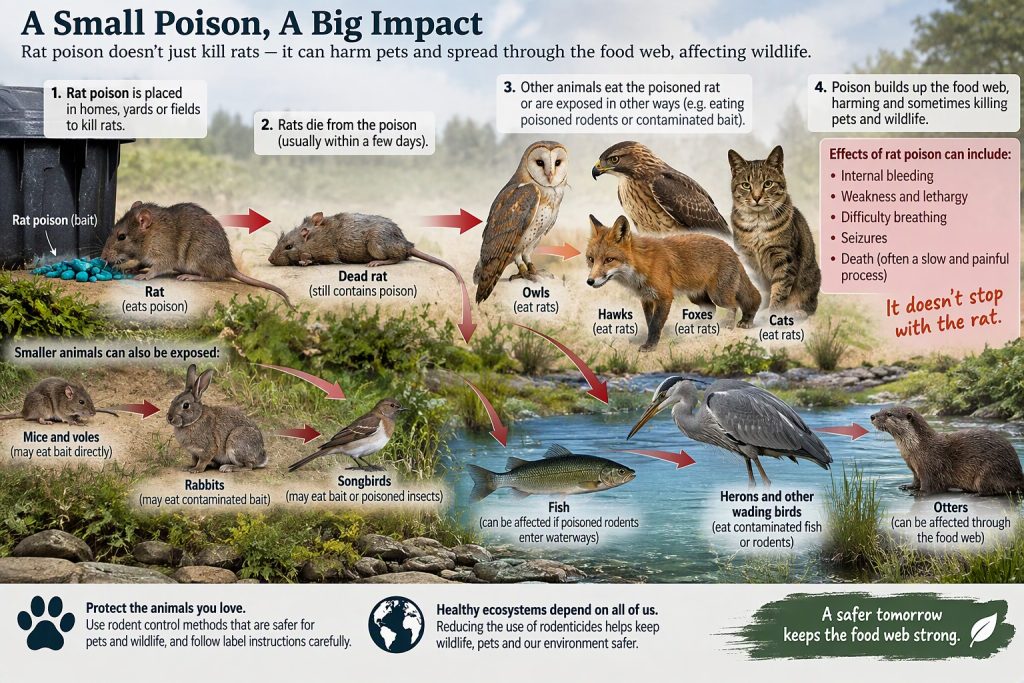 Even if one is to set aside the cruel, and indiscriminate nature of rat poisons, the slow death that rat poisons create also causes additional serious consequences. Modern anticoagulant rodenticides are so strong that they not only kill the rats but through secondary poisoning, they also kill animals higher in the food chain that feed on poisoned prey. This is because the rodents (or other wild animals) that eat the poison do not die immediately. Instead, they remain sluggish and disoriented for days, making them easy prey for their natural predators.
On The Howe we have many natural rat predators. All of whom help us every day by controlling the allotment rat population. These include barn owls, red kites, jackdaws, crows, buzzards, foxes, and most recently polecats. Rat poison is a real risk to these animals as every time they eat a poisoned rat the poison builds up in their bodies. Recent research, for example, has shown that 79% of polecats in England and Wales had detectable levels of one or more rodenticides in their livers.
We also have many local domestic cats who visit The Howe. This means that using rat poison here can not only damage our wildlife, it can also put our neighbours’ pets at risk. Because every time a cat eats a poisoned rodent, the toxins then build up in their bodies too, meaning the rodenticide eventually proves fatal to them as well.
More Unintended Consequences
If enough of the predators die in this way, over time it results in a decline in their population – which in turn leads to a reduction in our local natural pest control. By killing off the birds of prey and mammalian carnivores that naturally hunt mice and rats in their thousands every year, rodenticides destroy the wildlife that helps us keep our rodent populations in check!
How Can We Better Control Rats?
To naturally reduce and eliminate our rat population, we must support and protect our local rat predators while doing our part by ensuring we are a less attractive place for rats to visit! This involves removing their access to food, water, and shelter, alongside using physical deterrents.
On the allotment this means making sure we harvest fruit and vegetables promptly and clean up any fallen or rotting fruit from the ground. Take allotment green waste to the green waste tips on The Howe. Eliminate standing water by fixing dripping outdoor water butt taps, empty any buckets, and remove stagnant water sources.
Store anything edible in bins with tight-fitting lids and line or elevate compost bins with fine-gauge wire mesh to stop burrowing . Turn compost heaps regularly – at least twice a year. Don’t add waste from home (e.g.cooked food, peelings, eggshells, meat scraps, potatoes or dairy) to allotment compost heaps.
Block gaps, cracks, and holes around your shed foundations or vents using wire mesh, concrete, or metal sheeting (rats can squeeze through tiny openings). Periodically move garden pots or other stored items – this makes the environment feel unsafe for rats who are neophobic (suspicious of change). In general please also keep allotment areas tidy by removing rubbish such as old wood or plastic which may also provide shelter and harbourage for rats.
Consider natural deterrents. Rats seem to dislike strong smells. Some gardeners swear that planting strong-smelling herbs can help such as growing mint, garlic, rosemary, or lavender around garden or allotment plot borders. Alternatively, you can make a natural spray using crushed garlic, cayenne pepper, water, and a bit of washing up liquid, then apply it around perimeters and burrows. Likewise essential oils can deter rats. Rentokil suggests soaking cotton balls in pure peppermint oil, eucalyptus, or citronella and placing them around sheds or other places rats might seek shelter.
What if I Still Need to Kill Rats?
If all the above deterrents do not work, then arguably rat traps are much more humane. Humane traps exist but are only effective if the rats are released some miles from the original site. A well-placed (i.e. where children and other pets or wildlife cannot reach them) high-quality snap trap strikes the rodent’s neck, head, or back with significant force, causing an immediate or near-instantaneous death.
The Howe’s View
Due to the cruel and slow deaths that result, and the severe unintended harm to wildlife and pets, as well as the broader ecosystem, we do not support the use of any rodenticides on The Howe.
Photo of rat by Michelle Gordon on Unsplash.
Leave a Reply