


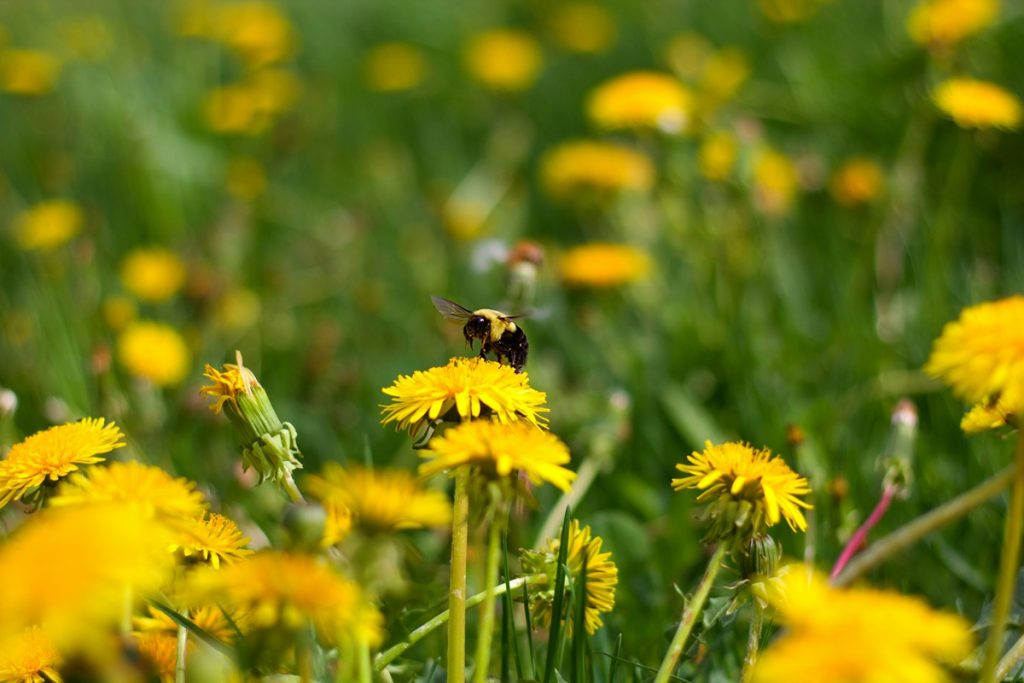

Dandelions have a mixed reputation.
While children love them, most gardeners think of them as weeds – but many folk don’t realise that this is only a very recent attitude.
In fact, the humble dandelion used to be considered to be a bit of a superstar, so maybe it’s time for us all to give them a second chance?
Dandelions from friend to foe – and back again
It’d be fair to say that dandelions have been on a bit of a ‘journey’.
Dandelions (Taraxacum officinale) have existed in the UK for thousands of years, thriving in disturbed soil. Long regarded as a “virtuous herb” for treating ailments by historical figures like Nicholas Culpeper, they were also traditionally valued as food and by beekeepers as early bee forage.
While historically cultivated and common in gardens, it was only in the post-war era they instead became viewed as weeds and a gardener’s worst enemy. This change was driven by the rise of suburban 1950’s perfect lawn culture, which prized uniform, manicured grass monocultures over more natural settings.
Post war intensification of agricultural, industrial, and social systems demanded tidy, uniform landscapes and created a demand that was met by the commercial development of increasingly aggressive chemical herbicides. This perception shifted wildflowers from “useful herbs” to “enemies” to be sprayed or destroyed. When previously, they were valued and often welcomed in gardens, the advent of weedkillers created a societal expectation of tidy, wildflower-free spaces – and so turned the presence of wildflowers into a sign of neglect.
More recently, a relaxation of these rigid gardening ideals and habits, combined with an increased awareness of biodiversity, means that wildflowers such as dandelions are now celebrated by organizations like the RHS. Indeed The Royal Horticultural Society now describes dandelions as “a wildflower which plays a big part in the garden by providing food for insects and birds and helping our garden thrive”.
What’s so good about Dandelions?
1. They’re vital for bees and birds
Dandelions provide fantastic early forage. Because they bloom early in the spring, dandelions provide one of the first food sources for bees, particularly in urban areas which have few other, varied, nectar-rich flowers.
They are especially important for queen bumblebees and solitary bees waking from hibernation, acting as a crucial sustenance source that supports pollinator populations.
- Abundant Nutrients – they offer both pollen and nectar, which are crucial for the development of young bee larvae.
- Easy Access – their simple, open flower structure allows a wide variety of bees—including honeybees, bumblebees, and solitary bees—to easily access their food sources.
- Long Season – they bloom from early spring through autumn, providing a consistent, sustainable food source for over 90 different species of bees.
Dandelions seeds also provide food for wild birds making the plant a valuable food source. Goldfinches, house finches, sparrows, buntings, and siskins are frequently observed feeding on the seed heads (or “clocks”). Allowing dandelions to grow, particularly during “No Mow May,” provides essential, readily available nourishment for these birds.
N.B Letting dandelions grow, even just in part of a garden, helps create a more natural habitat for insects and small wildlife. So to play your part in helping save our bees then why not delay the first mowing of your lawn until at least May to allow dandelions to bloom. If you do want to remove dandelions from your lawn or flower beds then avoid chemical control. Instead of spraying herbicides, which can kill 100’s of visiting bees, remove dandelions by pulling out their roots by hand to ensure a safe environment for pollinators.
2. They’re good for soil health
Did you know that Dandelions help with soil aeration and decompaction? Dandelions act as natural soil builders by breaking up compacted ground with deep taproots, enhancing aeration, and improving water drainage.
- Nutrient Cycling (Bioaccumulation) – they also function as nutrient miners, bringing minerals like potassium, calcium, and magnesium from deep soil layers, that most plants cannot access, to the surface.
- Soil Improvement & Fertility – as they decompose, they add organic matter, improving the nutrient profile of the soil.
- Enhanced Soil Life – by improving aeration and breaking up heavy soil, they create a better habitat for beneficial creatures like earthworms.
- Ethylene Production – dandelions also produce small amounts of ethylene gas, which can help trigger the ripening process for nearby fruit-bearing plants
3. They’re 100% edible for humans
As many avid foragers know, every part of the dandelion plant is edible.
Dandelion leaves are slightly bitter, like arugula, and are good in salads or cooked. Its flowers can be used in teas, syrups, even wine. The dandelion root has been used as a tea for a long time, going back at least several centuries in Europe and Asia, where dandelion was used for digestion and general health.
A more specific surge in dandelion root “tea” (especially roasted, coffee-like versions) happened later in the 19th -20th century when it became more widely used as a coffee substitute, particularly in times or places where coffee was expensive or hard to get. This increased during events like World War I and World War II, when coffee shortages pushed people toward alternatives like roasted dandelion root.
4. They also have medicinal qualities
Dandelions have been used in herbal medicine for digestion and liver support. People used to call dandelions “wet-the-bed,” which reflects the plant’s natural diuretic effect.
Dandelion tea is often drunk to help support digestion, reduce water retention (bloating), and promote liver health. Rich in antioxidants and vitamins A, C, and K, it acts as a natural diuretic and caffeine-free coffee alternative that supports detoxification. This effect is linked to compounds in the plant that support fluid balance and kidney function.
If you’re familiar with the childhood warning “don’t pick dandelions or you’ll wet the bed,” that’s definitely a bit of an exaggeration. Just touching or picking them won’t make that happen!
More Information
We hope this blog has piqued your interest! For more information about dandelions why not click on the the links below:
Dandelions – why they matter RHS Youtube video
Dandelions are a lifeline for bees on the brink – we should learn to love them – Inside Ecology
Dandelion: So Much More Than A Weed – Caledonian Horticulture blog
Photo by <a href=”https://unsplash.com/@bennito05?utm_source=unsplash&utm_medium=referral&utm_content=creditCopyText”>Benjamin Grenier</a> on <a href=”https://unsplash.com/photos/yellow-and-black-bee-on-yellow-flower-during-daytime-rauTqt2YAwU?utm_source=unsplash&utm_medium=referral&utm_content=creditCopyText”>Unsplash</a>
Leave a Reply