


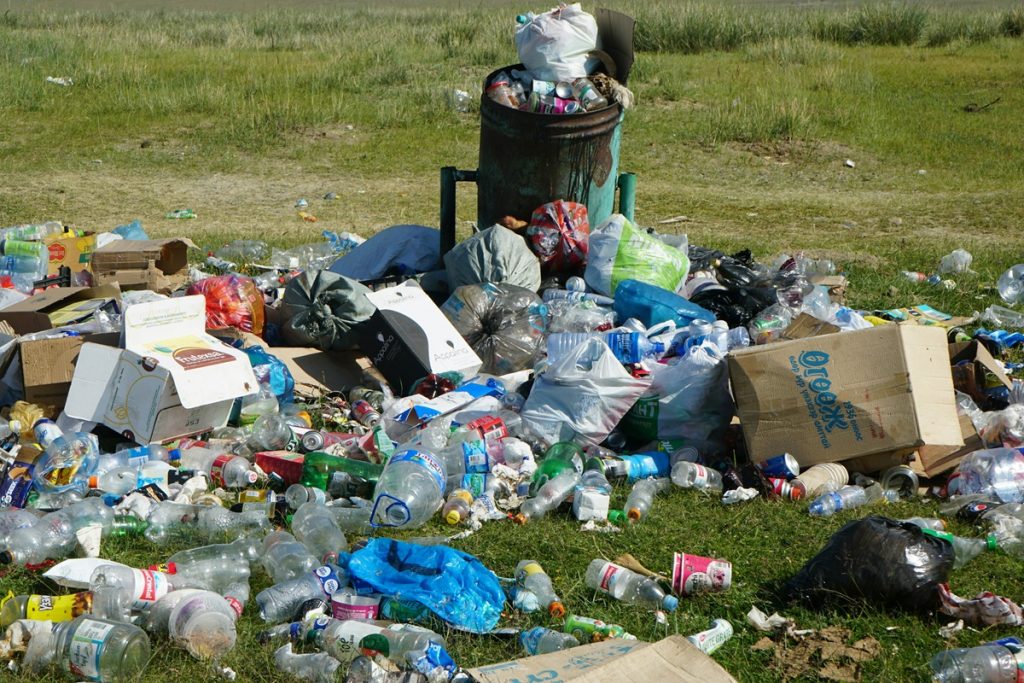

The Howe Allotment Association has recently taken on board the challenge of minimising the use of plastic on the allotments and encouraging the use of more sustainable alternatives. In this blog we cover some of the reasons behind this decision, and give ideas for how we can all minimise the plastic we inadvertently add to our gardens and allotments .
Where does all the plastic in our soil come from?
Allotment holders frequently bring plastics into growing spaces deliberately. Often as an alternative to using weedkiller. Fleece, weed suppressant fabric and mesh are useful modern materials to help manage weeds and other pests. But unfortunately, they also quickly erode over time, shedding plastic as they go. Likewise, plant pots and reused bottle cloches, eventually break up in sunlight and so bits of them end up in the soil.
Plastics also appear on allotments as a result of contamination, particularly in composts and manures that are purchased from garden centres. To be permitted in certified organic production green waste compost must meet the PAS 100 quality standard, but this includes a plastic limit of 0.12% by weight which can be quite a lot if you use several bags each year to grow your seedlings or tomato plants!
More generally, contamination occurs from our environment. Via litter, or blown in by the wind, and small particles that travel into the allotment areas as dust and in the rain.
Why is using plastic sheeting bad for soil health?
Plastic left on the land over winter certainly helps warm the soil and reduce unwanted weeds, but the downside is it denies the area much-needed rainwater. Gardeners sometimes therefore complain that their soil is too dry in spring, and if the area is trodden on it also compacts the soil.
If impermeable plastic sheeting is left on for long periods it also reduces essential microbial activity, crucial for nutrient cycling, directly leading to lower soil fertility and diminished crop yields. Using plastic sheeting can also cause biological damage as soil organisms, such as earthworms, suffer from stunted growth and reduced survival rates due to ingesting plastic, which disrupts the natural, healthy soil food web.
Using weed-suppressant fabric also limits the effect of frost on the soil and prevents the creation of a “frost tilth” – which is created by the constant freezing and thawing action on the soil through the months of winter. Traditionally farmers and gardeners would plough or dig to leave a rough surface. Frost, snow and rain would act on the uneven surface and break it down to a fine tilth in time for spring sowing.
Therefore, instead of using plastic sheeting, it is best to do what they did in the olden days! The best solution is to cover bare soil with farmyard manure, which will then be weathered over winter, and pulled down by worms. Both these actions create a wonderfully organic rich soil – ready for healthy crops come the following spring and summer!
Why is using plastics bad for humans?
Once all of these plastics are in the soil, they continue to breakdown. Plastic never goes away — it just breaks down into finer and finer micro particles. They then get into the food chain via the crops we grow in the contaminated soil and ultimately when we eat them, they get into our bodies.
Plastics also potentially leach chemicals into the soil. It’s not just plastic sheeting but also other materials such as mixed wool and nylon carpets which are a major source of microplastics. Even pure wool carpets often have synthetic glue and backings which if they are used to sheet down land, will leach chemicals and shed microplastics into the soil.
Studies in animals and human cells suggest microplastics exposure could be linked to cancer, heart attacks, reproductive problems and a host of other harms. When a key motivation of many allotment holders is to grow their own healthy organic vegetables and fruit for many plastic contamination is becoming a major concern.
What can we all do differently?
Basically avoid using plastics whenever possible. Many of the ‘old fashioned’ ways of growing are worth returning to.
1. Seedlings
Sow more crops directly or create your own seedling pots using newspaper. It’s free and has the added benefit that when the plants are ready to go outdoors, the whole pot can be planted into the soil. All you need to get started is a pile of newspaper and some cylindrical objects to act as moulds. Try using a bottle and wrapping strips of paper tightly around it, several times, before folding over the base and sliding the paper off. The internet, and Youtube in particular, is full of instructions and videos if you haven’t done this before.
2. Compost
Where possible create your own compost at home using the green waste from your kitchen and allotment. You could also consider buying a wormery. The wormery compost, or vermicompost, is nutrient-rich soil made by worms when they break down kitchen scraps and organic matter. Wormeries produce valuable “worm castings” (poop) and a liquid known as “worm tea,” both excellent, natural fertilizers for plants, enriching soil with nitrogen and potassium for better growth. Wormeries are also ideal for people who have limited outdoor space, or live in flats, as the units are compact and can be kept indoors or on a balcony as there are no problems with smells.
If you do need to buy-in growing media, some garden centres have schemes where you can collect peat-free growing media using a refillable sack. Once you’ve bought it, inspect your compost and before use pick or sieve out any plastic you find.
3. Containers and Equipment
Continue to use existing items you have made from more durable forms of plastic – after all, considerable energy has gone into their manufacture, but as soon as you notice any brittleness or breakdown, stop using them and recycle them if possible.
It’s easy to get drawn into the many new products in garden centres so always think about whether certain plastic items are really needed at all.
Store reusable plastic items in a shed or out of sunlight to slow their degradation and prolong their useful life.
Look out for metal or wooden containers. They may be more costly upfront but will last longer.
Best of all, try to reuse and recycle when you can – there are so many things that can be made from free stuff like old pallets. Again the internet and Youtube have some fantastic ideas and videos!
4. Weed suppressant and mulching materials
Likewise consider alternatives to plastic fabric products.
Cardboard is a great material and with the rise of internet shopping and home delivery is generally free too!
Other materials to consider include sheep’s wool which is a great natural mulching alternative. Wool is a sustainable choice as it is a byproduct of the farming community and absorbs moisture then releases it back slowly, so your plants won’t need watering as often. It’s 100% natural and when after a year or so it breaks down it feeds the soil. You can also use it as capillary matting in your greenhouse.
If you do buy new plastics, always go for durability e.g. good quality polypropylene mulches (woven plastic) can last over 20 years. In contrast a thin polythene film will damage easily and so only have a single use.
5. Dealing with Plastic Debris
Clear away any plastics from the allotment before they become brittle.
Hand pick plastic debris. There’s no straightforward way to remove microplastics once they’re in soil but pick out any obvious pieces. At least they will be gone and can’t break down any further.
We hope we found this blog informative.
From all of us at The Howe Trust and Allotment Association – Happy Gardening!
Photo by Ariungoo Batzorig on Unsplash
Leave a Reply